The mental models we rely on shape what we see, what we miss, and what becomes possible.
We do not see the world as it is. We interpret it through mental models built from experience, knowledge, and assumptions about how things work.
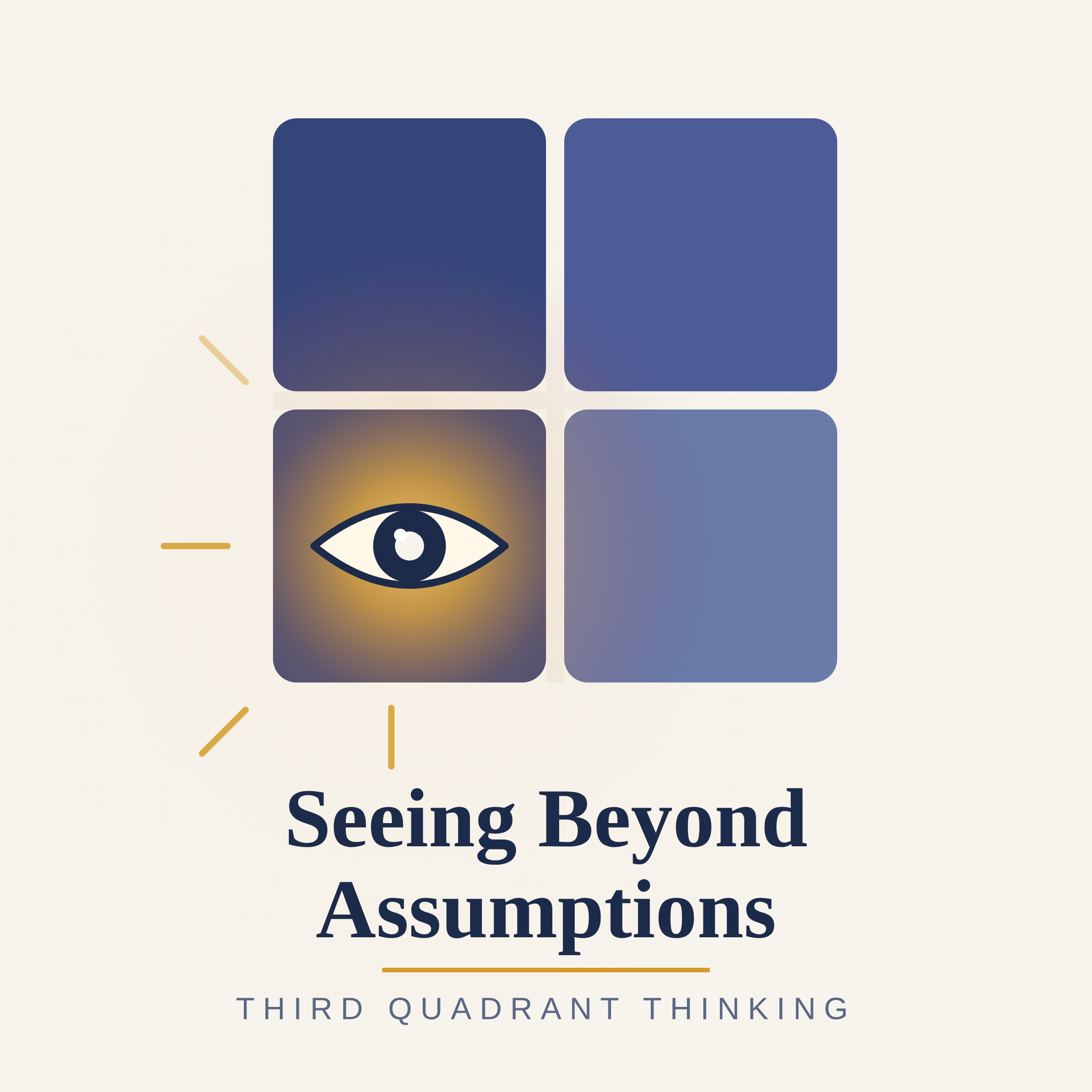
How Innovators Unlock Opportunities Others Miss
The Third Quadrant
Most innovation begins with what we already know: an existing problem, an existing technology, or an existing market. But some of the most interesting opportunities sit outside those familiar frames.
The Third Quadrant is the space created when we challenge the assumptions connecting what is possible with what we believe is valuable.
It shifts the question from How can we improve what already exists? to What becomes possible if an assumption we have been treating as fixed is no longer true?
The Third Quadrant is where hidden possibilities become visible.
“The technologies hadn't changed. The opportunities already existed. What changed was my ability to recognize and act on them.”
Opportunities are often hiding in plain sight. What makes them difficult to see are the assumptions we carry about how things work, what customers want, what is possible, and what must remain the same.
Innovators learn to make those assumptions visible.
By questioning the mental models that shape how we interpret the world, they can recognize possibilities that others overlook, reframe familiar problems, and see where change could create something genuinely new.
Seeing Beyond Assumptions explores how this ability can be deliberately developed. It provides a practical way to identify the assumptions shaping a situation, consider alternative perspectives, and uncover opportunities that were there all along.